Colorado Symphony
material design / immersiveAbout the project :
Two week sprint
Cross-functional team of four
My focus: user interviews, competitive strategy, research and testing, personas, journey mapping
While performances are currently well attended, the Colorado Symphony Orchestra is facing a problem shared by nearly all symphonies: an aging population of supporters and an ongoing struggle to attract younger generations - specifically millennials - to their performances.
My team was tasked with exploring ways to increase interest and attendance to events among younger demographics, with the goal of ensuring that the symphony maintains relevancy in the community for years to come.
How can we inspire millennial attendance at symphony events?
Research conducted by the CSO indicated that dedicated symphony-goers currently enjoy the following aspects of performances:
Appreciation of the history, structure, and beauty of the music being performed.
Their belief was that building a solution focusing on informing millennials on these aspects of performances would empower new attendees and improve their overall experience.
Would this approach engage the younger crowd?
As a team of millennials, we put our hunches aside and conducted a series of interviews that focused on the general habits displayed by young people while searching for entertainment options in the area, and the motivations behind their approaches.
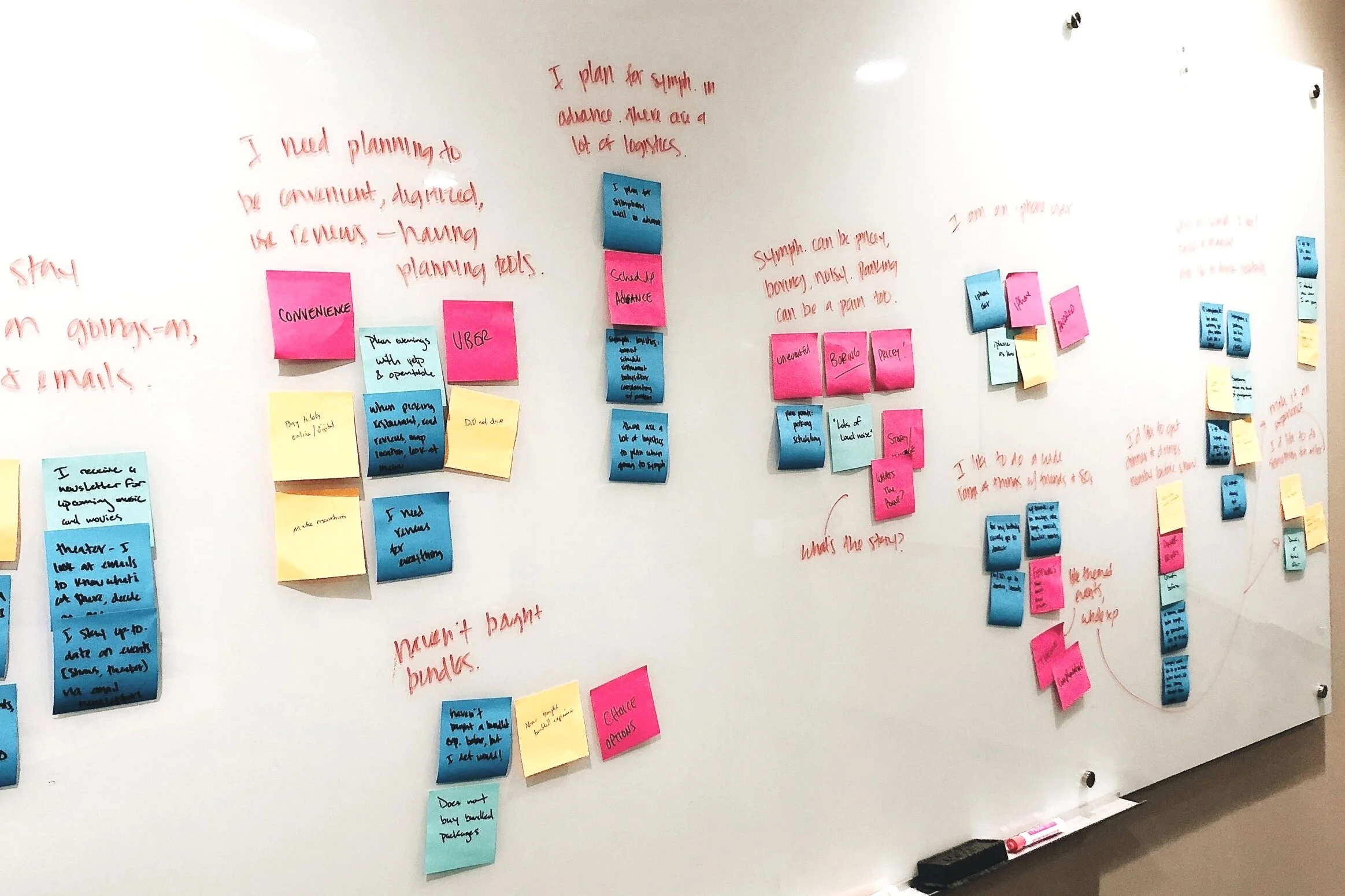
Identifying patterns based on user interviews conducted by the team. (History, beauty and structure did not end up high on our list of findings..)
Know Your Audience
Generally, the interview data pointed to a few common themes.
Millennials planned weekend events with a group of friends or a significant other, often involving food and/or drinks
Plans often included live music performances more typically aligned with the millennial crowd (indie rock, EDM, etc)
Budget-conscious interviewees felt excluded from potentially attending symphony events based on cost
In a brainstorming session with the team, the concept of a bundled package took shape. Borrowing from proven platform designs, the CSO would partner with local restaurants and bars on event nights, offering promotions to the places millennials already frequented with the added bonus of promotional pricing for tickets to a symphony performance. Nothing groundbreaking, but with limited time we moved forward with a fair bit of confidence and presented our ideas.
Our proposed plan was met with the following feedback:
Combining activities millennials loved with the addition of a CSO performance as an afterthought was not a plan that would inspire a new generation of loyal followers. Stakeholders were not on board with our approach and challenged us to explore more creative solutions to solving the problem.
The idea was dropped before a single wireframe was created.
20 Minutes
We were sent back to square one with nothing to show for three days of research aside from a suspicion that motivating millennials to put down their phones in favor of Bach’s Unaccompanied Cello Suites may just be an impossible task to solve. Not to mention that the solution was supposed to be…on their phones.
(On day one of the project our team had committed to specific roles. After assessing the situation our project manager stepped up and presented a plan: we would take exactly twenty minutes to brainstorm new ideas - fun ideas, creative ideas, outside-the-box ideas that might just bridge the gap between the millennial crowd’s short attention span and the symphony’s established role in entertainment over the centuries. When the time was up, we would commit to the best new solution and more forward regardless of quality or confidence.)
We reserved a conference room with a whiteboard and sure enough, it worked.
Ideate, Iterate
As it turned out, our initial research still held some value. Through our first round of interviews and data synthesis, a few high-level personas were uncovered:
Frequent/occasional symphony attendees
Those open to symphonic and classical performances but generally didn’t seek them out
Folks that had no prior interest or made a point to avoid this type of entertainment.
While useful, these targets only told part of the story. What we had overlooked was motivation. Across all categories (income level, age, marital status, etc) data suggested that millennials were seeking out activities that put an emphasis on spending time exploring and experiencing something new.
When prompted, interviewees recalled tactile and visual elements of memorable and enjoyable experiences in greatest detail.
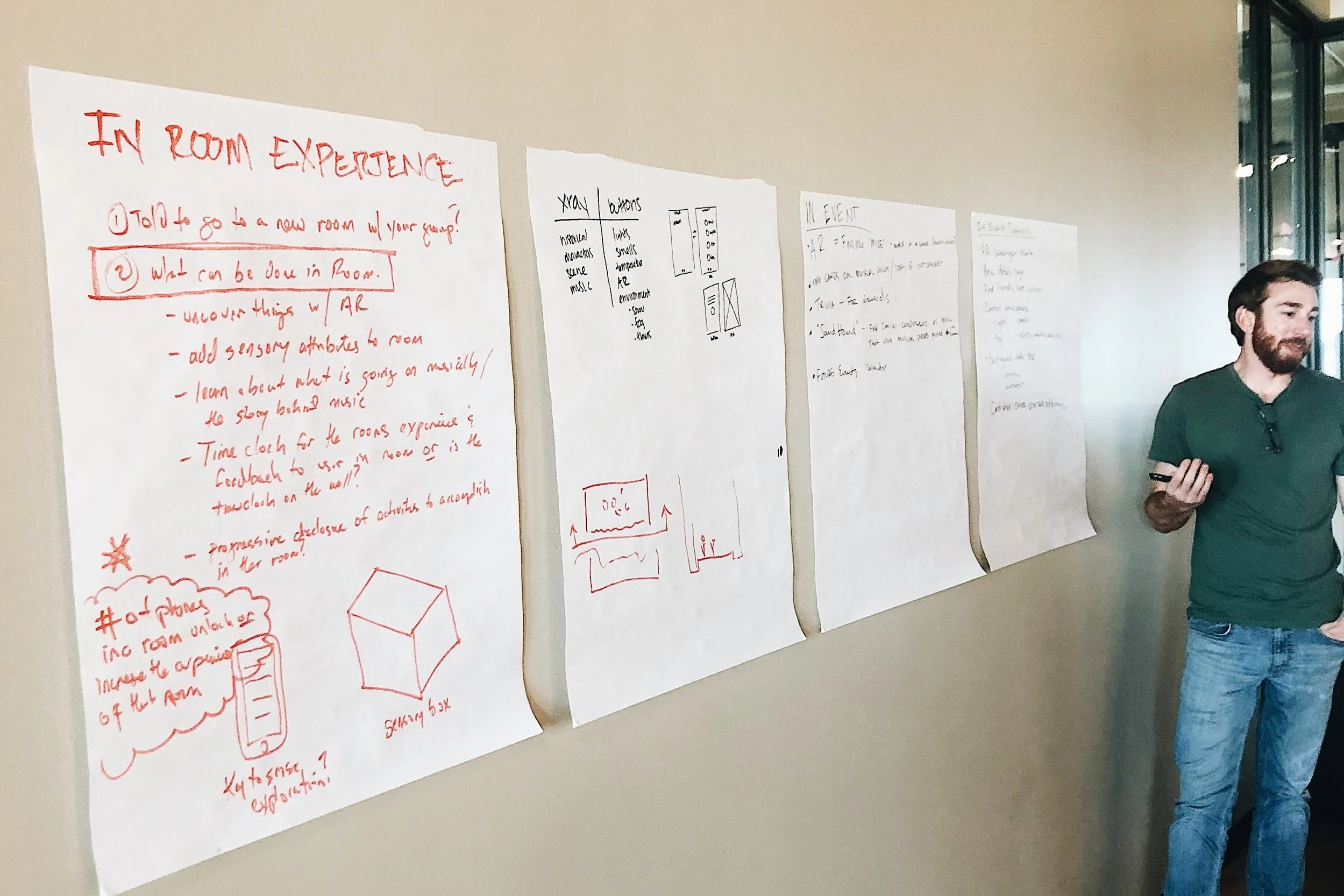
Several viable ideas emerged from the the brainstorming session with varying levels of detail. We narrowed our focus to the concept of a full immersive experience, incorporating elements of events that had a proven track record attracting millennials.
Immersion - The NutCracker Sensory Suite
Our research uncovered that The Nutcracker was unique in its popularity and familiarity among millennials, and lent itself well to creating an immersive in-person event that would be enhanced by leveraging a mobile app with event-specific content and augmented reality functionality. The three main focal points we defined were:
Education
Immersion
Technology
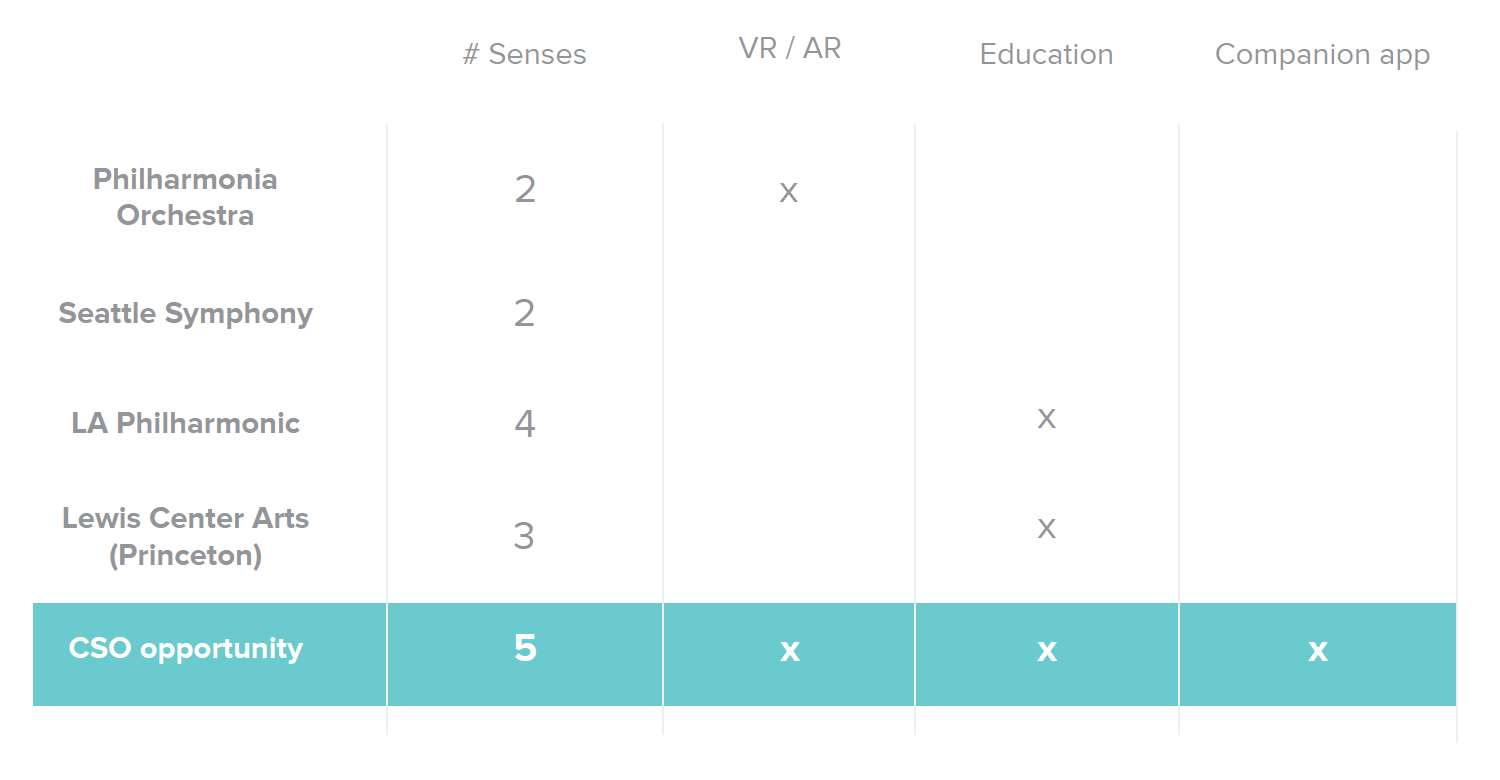
Attendees interact with the application to guide their experience though a venue with multiple rooms, each with a theme reflecting the four acts in the traditional Nutcracker ballet, along with a live symphony accompaniment. AR games and visuals would also be accessed through the app for each room.
Initial wireframes covering the basic functions of the platform.
App Map & Material Design
Combining a simple scannable ticket page with easy-to-digest content specific to each room, users would enjoy an in-app experience that mirrored the experience of navigating the venue itself. Incorporating depth, motion and color into the app was our goal from a design perspective, and the team was aligned in pursuing Material Design guidelines to accomplish this most effectively.
Once downloaded, the application functions as a user’s ticket as well as providing event specific content within the venue itself.
Personas
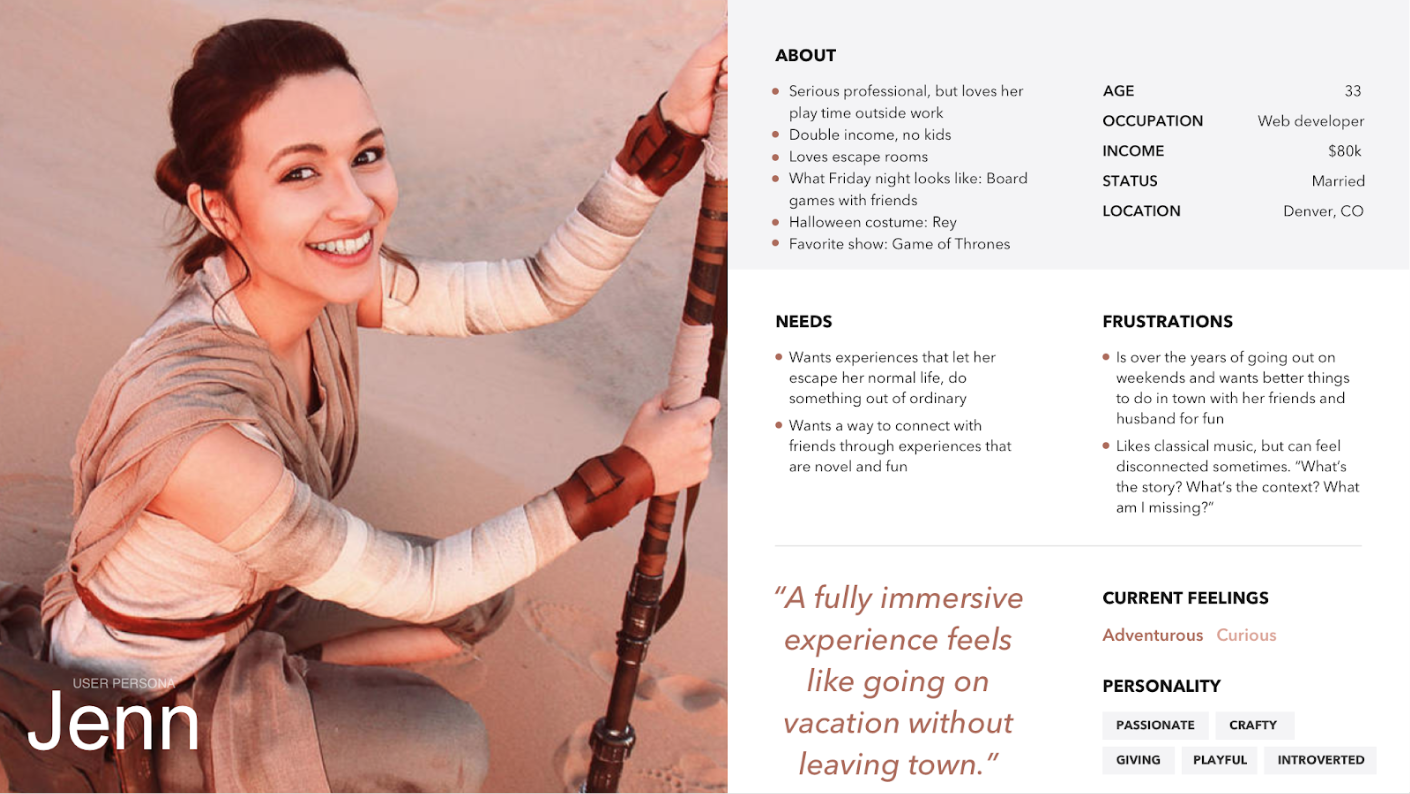
Two final personas emerged based on interviews and research. Jenn represents the young professional crowd aiming to be more intentional with her free time. Content based on the ballet’s origin and the music being performed live at the event are geared toward enhancing this persona’s desire to learn and feel more connected to the experience.
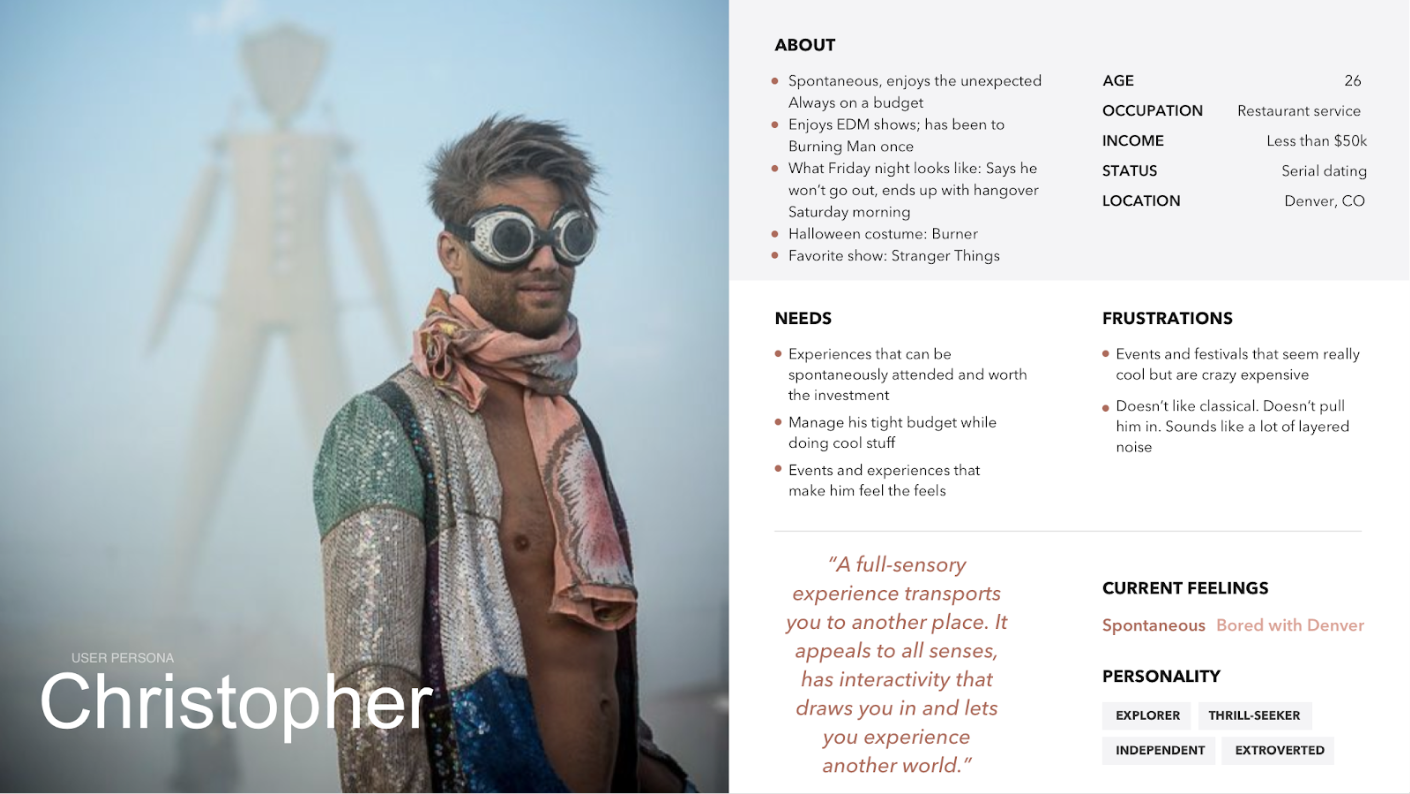
Christopher embodies the adventure seeking crowd searching for the next unique experience. Our decision to incorporate augmented reality features into the application was based mostly on this persona’s affinity for novelty and direct interaction with the surrounding environment.
High Fidelity
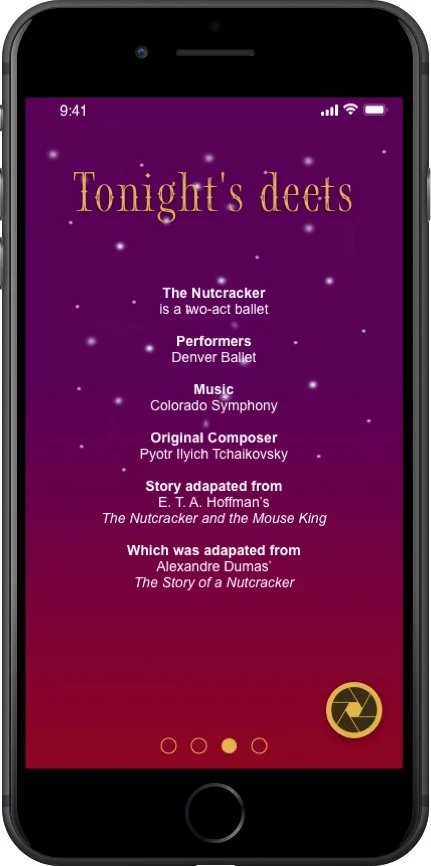
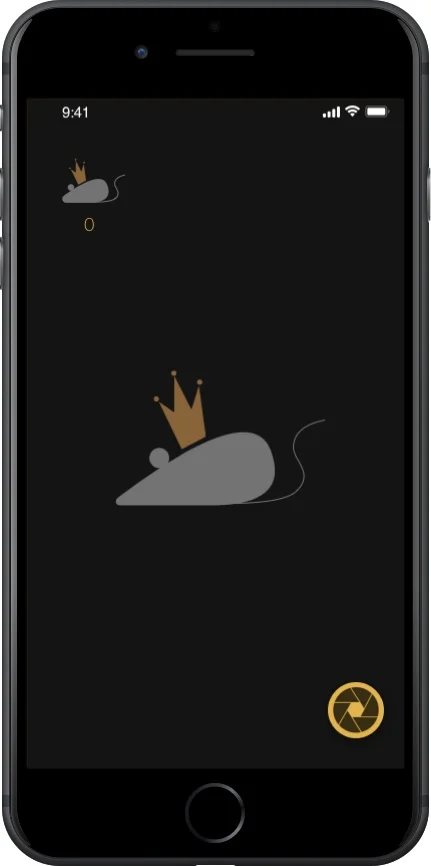
Our final prototype incorporated Nutcracker typefaces and visuals. We aimed to create a straightforward layout that worked in parallel with the experience of being at the venue, exploring and searching for surprise hidden throughout the physical space. Tickets would be accessed through the app, along with a calendar of upcoming events.
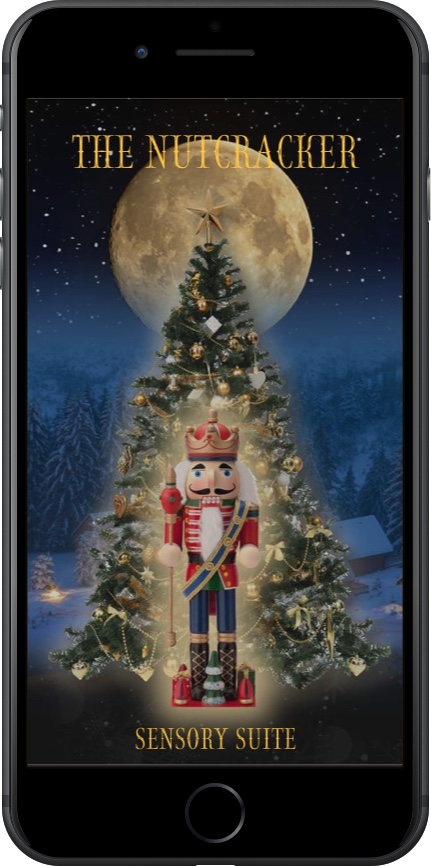
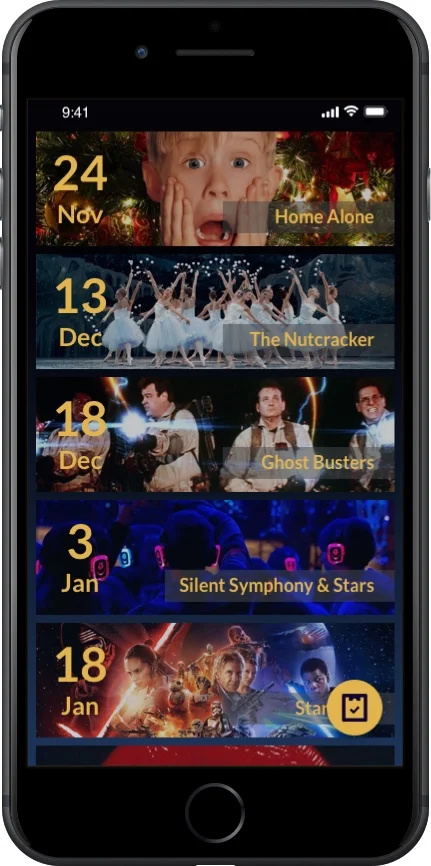
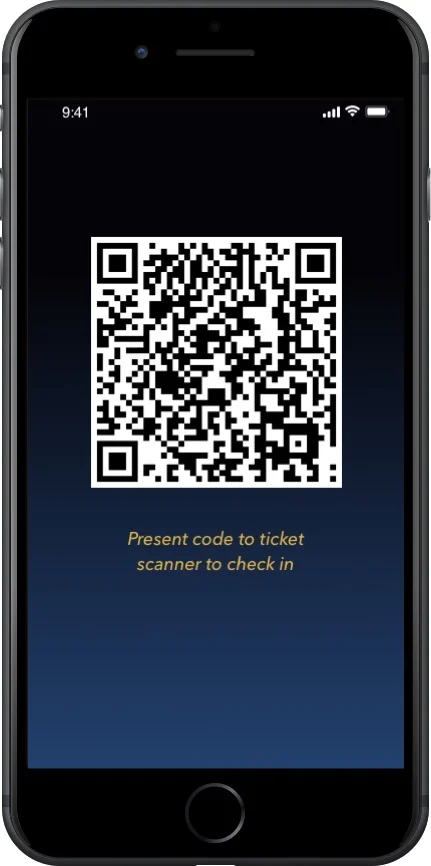
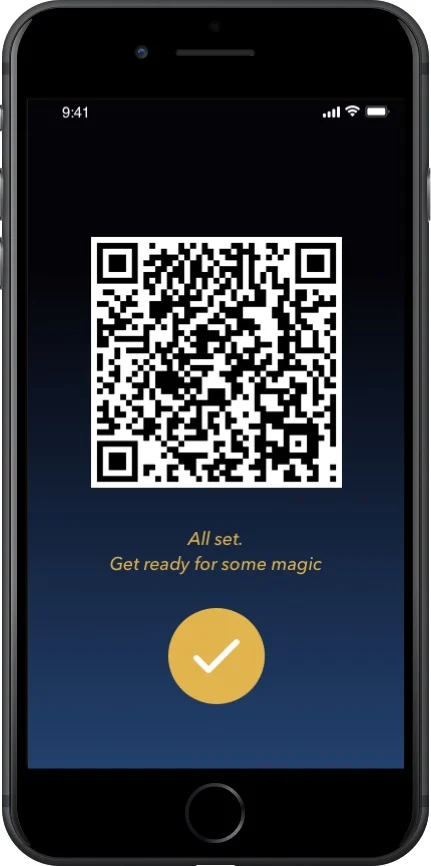
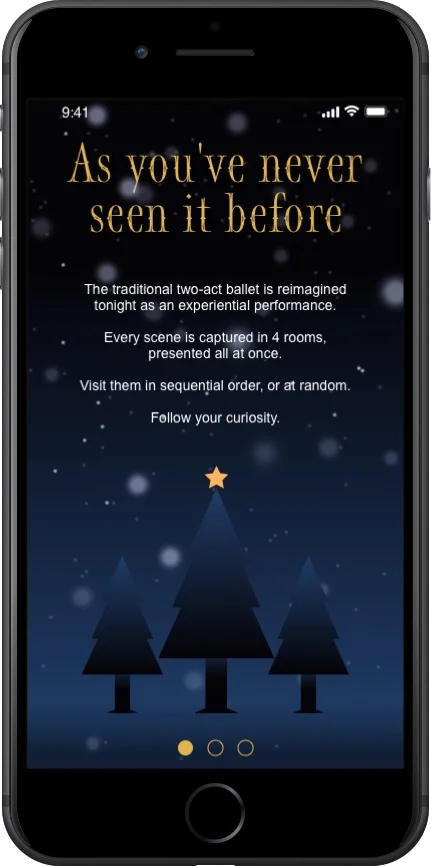

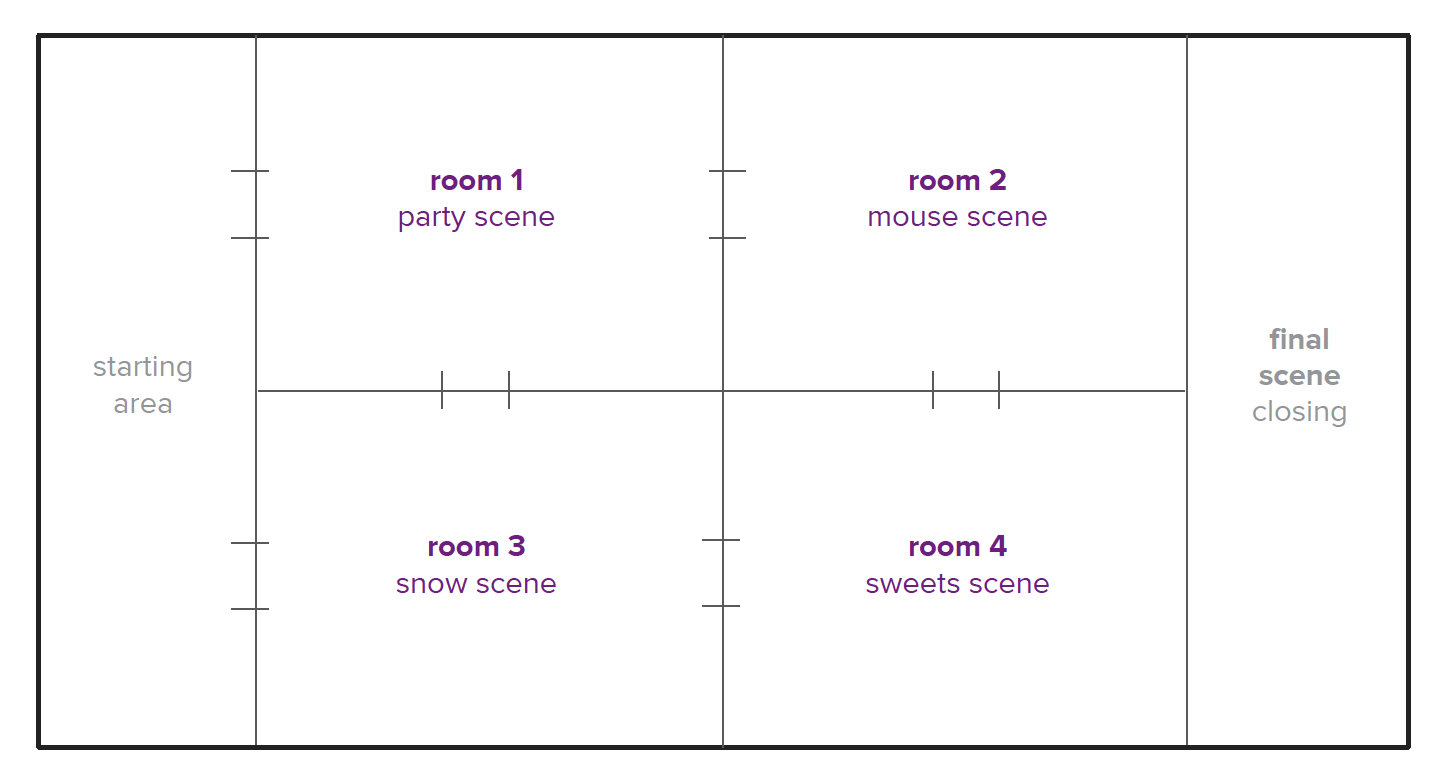
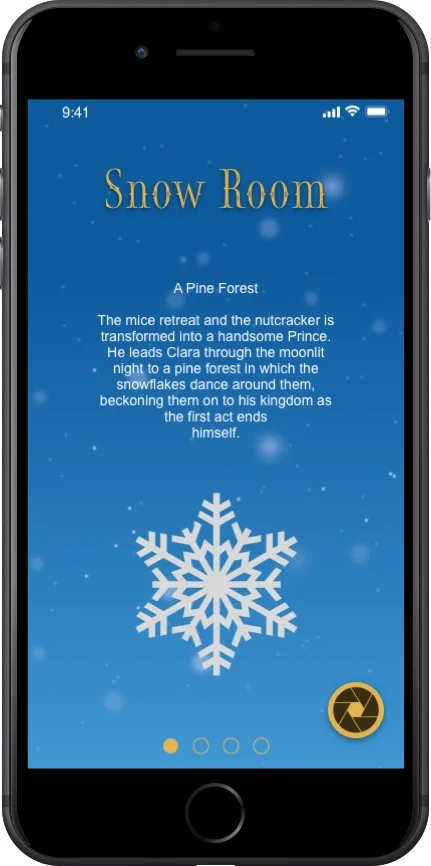
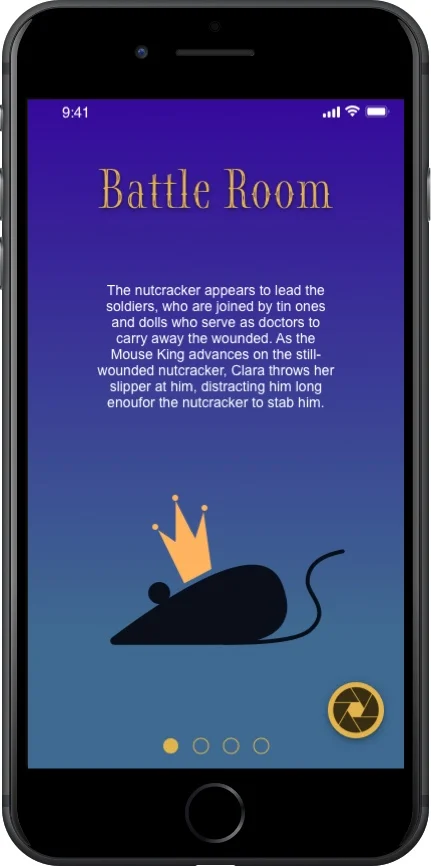
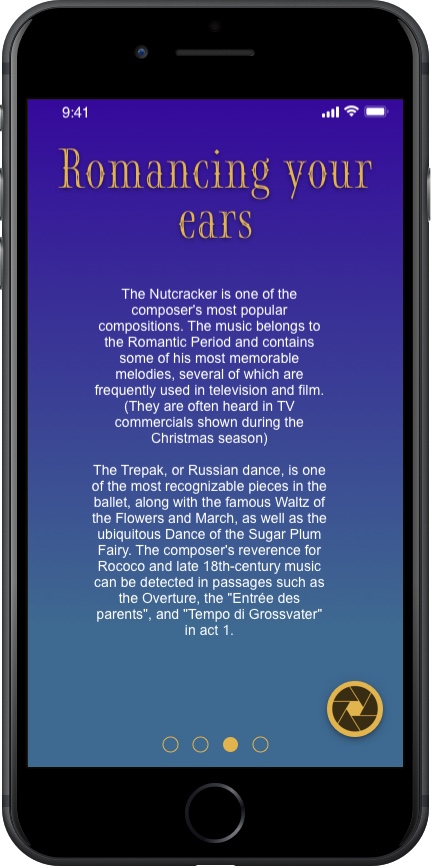
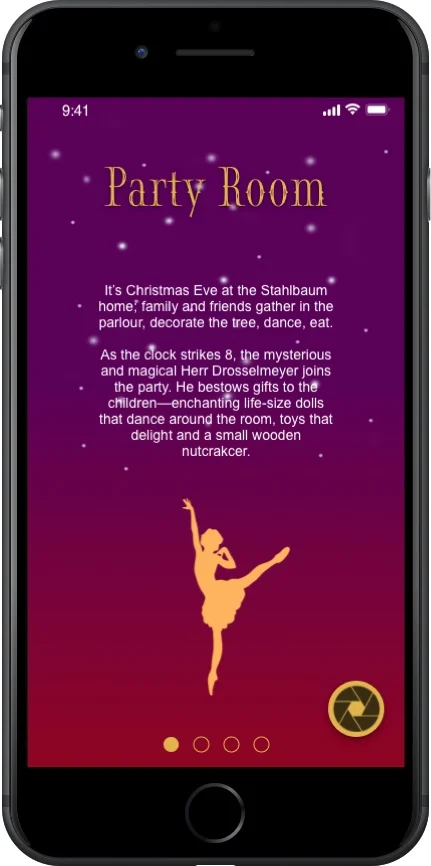
Within the app, information about each of the four rooms had a specific color theme and subtle animations intended to help users navigate the experience and orient themselves. Each section included a brief summary of the space and its associated act of the ballet, information about the live musical performance, and an interactive augmented reality component.
Project Takeaways
While a bit painful, pivoting mid-project was the best thing that could have happened regarding the final outcome. In hindsight the more creative approach led to a solution that was received with an encouraging amount of positive feedback after presenting to an audience of other teams and stakeholders.
Next steps for the project included simple additions like a music recommendation engine and social components into the application to help improve the overall digital presence of the Colorado Symphony, as well as event-based ideas including guided AR tours and silent discos supported by the application.